Solopreneurship 101 🎯
Navigating the adventurous journey: Strategies for Independent Business Success


This post is all about Practical Tips, Tools, and Wisdom for Solo Entrepreneurs to Thrive Amidst Multiple Projects and Personal Responsibilities.

Feeling the pressure of time slipping away and your task list growing longer by the minute? Are you drowning in a sea of unfinished tasks and overwhelmed by the demands of daily life? With so much to do and only one life to do it all, it's easy to feel the weight of responsibility bearing down on you.
But do not worry !
If you're ready to reclaim control and make the most of every precious moment, then keep reading until the very end. This post holds the key to unlocking your potential and mastering the art of productivity in the face of life's relentless challenges.
In the dynamic world of solopreneurship, managing multiple projects simultaneously can be a daunting task. With the ever-present risk of overlooking crucial details or becoming overwhelmed by the sheer volume of tasks, finding effective strategies becomes paramount. This post serves as a comprehensive guide to navigating the complexities of managing multiple projects as a solopreneur.
Whether you're a seasoned entrepreneur or just embarking on your journey, this post provides invaluable insights to help you maintain organization, productivity, and sanity amidst the hustle. By offering practical advice and actionable tips, we aim to empower solopreneurs to thrive in their endeavors. Join us as we explore the intricacies of juggling multiple projects and discover how to excel in the fast-paced world of solopreneurship.
1. Common Problems that solo founders face:
Not getting the right co-founder – Getting the right founder with a similar vision is challenging !
Skillset mismatch with other founders - Solo founders may not have expertise in every area. But while collaborating with other founders, it may cause problems with knowledge and skill gap. Finding ways to fill these skill gaps can be challenging.
Trust issues — some people start stealing ideas and some people do fraudulent activities
Managing it all out as a solo founder — is hard
Solo founders have to spend their time mostly on content marketing, building products, managing funding, promoting on different channels and product distribution
Most important is getting back to consistency of all.
Learning new skills on the fly and implementing them in your projects
Don’t have enough resources to hire other freelancers and members
There is no single manual for solopreneurship — Some founders are looking to grow their businesses to IPO while others are focusing on financial freedom. Priorities differ for each founder and so do their goals for building and scaling their companies.
Despite all these hurdles, solopreneurs are managing and thriving in this tough world market.
2. Here are Some famous Solopreneurs who making millions in revenue each year !
Some solopreneurs have scaled their startups to 6 figures and beyond :
3. What do most solopreneurs have in common ?
No physical office location – that means no rent is paid for a physical office
Zero Employees
All businesses and everything is kept online
Most of them have multiple sources of income
Some are making in millions
Most of the revenue is through content marketing and their personal brand
Have not quit their job as it’s need of the hour. Though their job is the main source of income, they plan to quit their job in the near future. The trend currently is to manage a job and a side hustle .
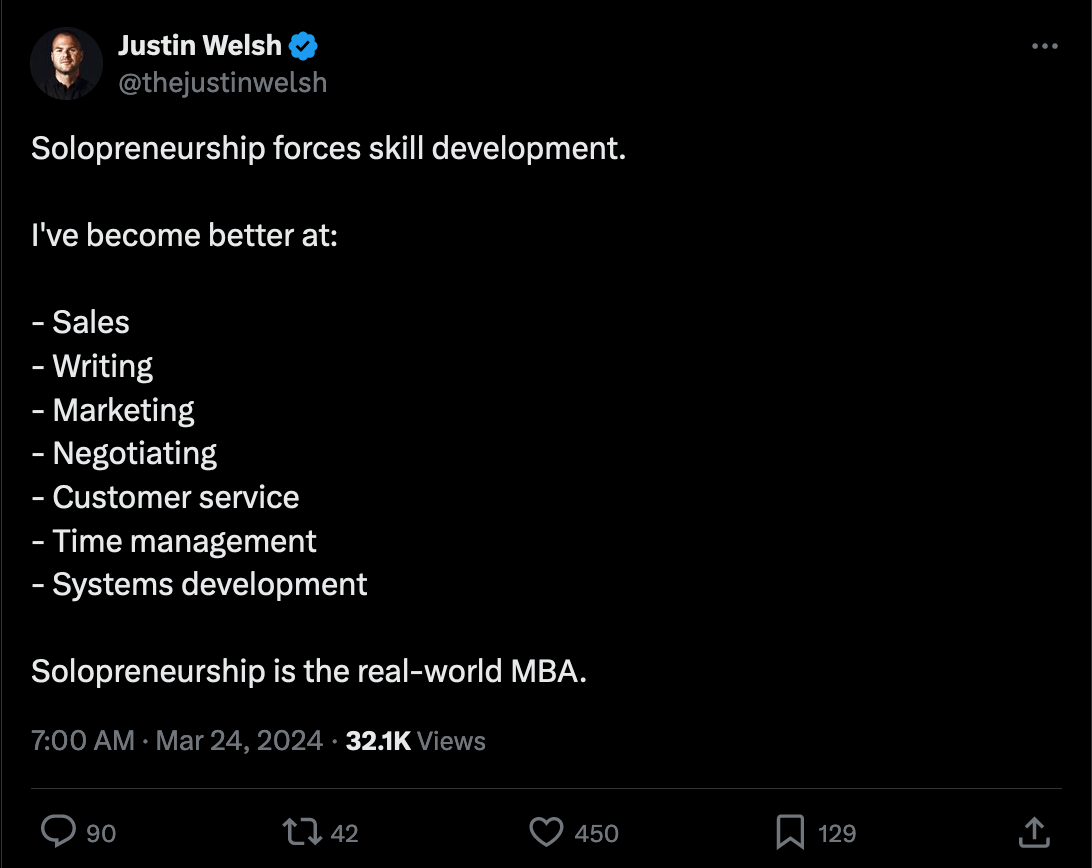
4. Having clarity on what you want to achieve:
Consider your core values to discern what truly matters. Your goals should align with these values for fulfillment. Envision achieving success to clarify objectives and fuel motivation.
And don’t forget to be realistic about your timelines.
While making content, Keep your personal brand in mind . Your clarity and vision will help you build your personal brand in the future.
5. It starts with taking responsibility:
Everything starts with responsibility. Become responsible for everything — your success, failure, pain, delays, inconsistencies — literally everything !
Remember why you started your startup in the first place.
"Most of the time, the answer would be making the world a better place!"
Get rid of negative people, it wont serve you in the long run and yes they are not needed anyways !
6. Prioritize your goals:

Prioritization is essential for managing multiple projects effectively. Begin by listing all your projects and categorizing them based on their scale and timelines, from nano to giga (and maybe beyond if you are highly ambitious 😉 )
Start assessing the importance and urgency of each project. Focus on high-priority projects that align with your purpose, goals and deadlines.
Evaluate each project's importance and feasibility using a decision matrix, then sequence them according to their rankings and timelines.
Be prepared to let go of some projects temporarily, focusing on those with the highest priority and impact. This strategic approach ensures you maximize productivity and allocate resources wisely.
7. Time-blocking to the rescue:

Leverage Project Management Tools:
Make use of project management tools such as Asana, Trello, or Todoist to efficiently monitor tasks, deadlines, and progress. These tools serve as organizational aids, ensuring no task slips through the cracks. MS Suite is preferred by corporates, but Asana stands out as an excellent choice among other complementary tools for entrepreneurs.
Utilize Time Blocking for Effective Project Management:
Allocate specific time slots for each project or task to maintain focus and avoid feeling overwhelmed. Take advantage of the calendar features available in your preferred email suite, such as Outlook, Google Calendar, or your smartphone's native calendar app.
By strategically assigning time, you can enhance productivity while minimizing distractions.
Balancing Job Responsibilities with Startups:
When juggling a job alongside startup endeavors, we employ time blocking extensively, organizing tasks by days and dedicating weekends to startups and side hustles.
This approach involves prioritizing startup goals, engaging in activities like content creation, market research, and product development. We use Notion to manage the progress of these tasks. While it requires effort and perseverance, maintaining consistency is crucial, even amidst challenges like burnout.
Consistent application of these strategies contributes to the eventual success of your startup.
Maintaining Consistency and Tracking Progress:
To ensure consistency across multiple projects, consider employing project management tools like Asana, Microsoft Todo, or Slack.
Additionally, utilize calendar applications to schedule tasks and appointments effectively. Leveraging these tech tools facilitates organization and streamlines workflow, enhancing productivity and progress tracking.
8. Outsourcing:

Delegate or outsource tasks whenever possible to free up time for critical activities, utilizing virtual assistants or freelancers for administrative tasks. Engage your support network of family, friends, and well-wishers productively.
Family and Friends:
Seek Advice and Mentorship: Ask for guidance and insights from those with relevant expertise or experience.
Create a Supportive Environment: Share your challenges and achievements with them, fostering a supportive atmosphere.
Celebrate Together: Involve them in your successes, celebrating milestones and accomplishments as a team.
Professional Connections:
Networking Opportunities: Expand your network by connecting with professionals in your industry for potential collaborations and growth opportunities.
Feedback and Collaboration: Seek feedback on your projects and explore opportunities for collaboration on mutual interests.
Promotion and Support: Encourage them to promote your business within their networks and provide support in various forms, such as referrals or testimonials.
Mentors and Advisors:
Seek Advice and Mentorship: Consult with mentors and advisors for guidance on strategic decisions and problem-solving.
Networking Opportunities: Utilize their connections and introductions to expand your network and access new opportunities.
Feedback and Collaboration: Solicit feedback on your ideas and projects, and explore opportunities for collaboration or joint ventures.
Promotion and Support: Leverage their influence and expertise to promote your business and gain credibility in your industry.
Online Communities and Supporters:
Utilize Social Media: Engage with online communities and followers to increase visibility and reach for your projects or business.
Testimonials and Resources: Request testimonials from satisfied customers or supporters, and share relevant resources or content to add value to your network.
Celebrate Together: Involve your online supporters in your successes, acknowledging their contributions and showing appreciation for their support.
9. Managing it all out :
Taking responsibility for your actions and staying motivated is where it all begins. Managing multiple responsibilities requires dedication and perseverance. Keep at it every day, knowing that persistence pays off in the end.
And don't worry about finding a co-founder just yet. Focus on your own path and trust that the right people will come into your life at the right time.
Maintaining balance is key to success. Strive to find the right balance between your professional pursuits and personal obligations.
Remember that,
Great things happen when the right people meet in the right place at the right time!
So keep doing what you're doing, stay focused, and trust that everything will fall into place when it's meant to.
10. Embrace the Journey:

It's essential for any solopreneur handling multiple projects to anticipate and prepare for challenges such as failure, overwhelming situations, rejections, and extended timelines and efforts.
Here's how to tackle them:
1. Embrace Failure as a Learning Opportunity: Failure is inevitable on the path to success. Instead of being discouraged, view failures as valuable learning experiences that can guide you toward improvement. Analyze what went wrong, adjust your approach, and keep moving forward with resilience.
2. Manage Overwhelming Situations: Break down overwhelming tasks or projects into smaller, more manageable steps. Prioritize tasks based on urgency and importance, and tackle them one at a time. Remember to delegate or seek support when needed, and don't hesitate to take breaks to recharge and regain focus.
3. Handle Rejections with Grace: Rejections are part of the entrepreneurial journey. Instead of taking them personally, use them as opportunities for growth and refinement. Seek feedback from rejections to understand areas for improvement and adapt your approach accordingly. Stay persistent and maintain belief in your vision despite setbacks.
4. Navigate Long Routes with Patience: Entrepreneurship is often a long and winding road. Stay patient and stay committed to your goals, even when progress seems slow. Break down long-term objectives into smaller milestones to track your progress and maintain motivation along the way. Remember that each step forward, no matter how small, brings you closer to your destination.
By acknowledging these challenges and adopting a proactive mindset, you can navigate the ups and downs of entrepreneurship with resilience and determination.
"It's all about preparing for the worst while striving for the best."
 | A guest post by
|